
Food security wins from the 2026 Vermont legislative session
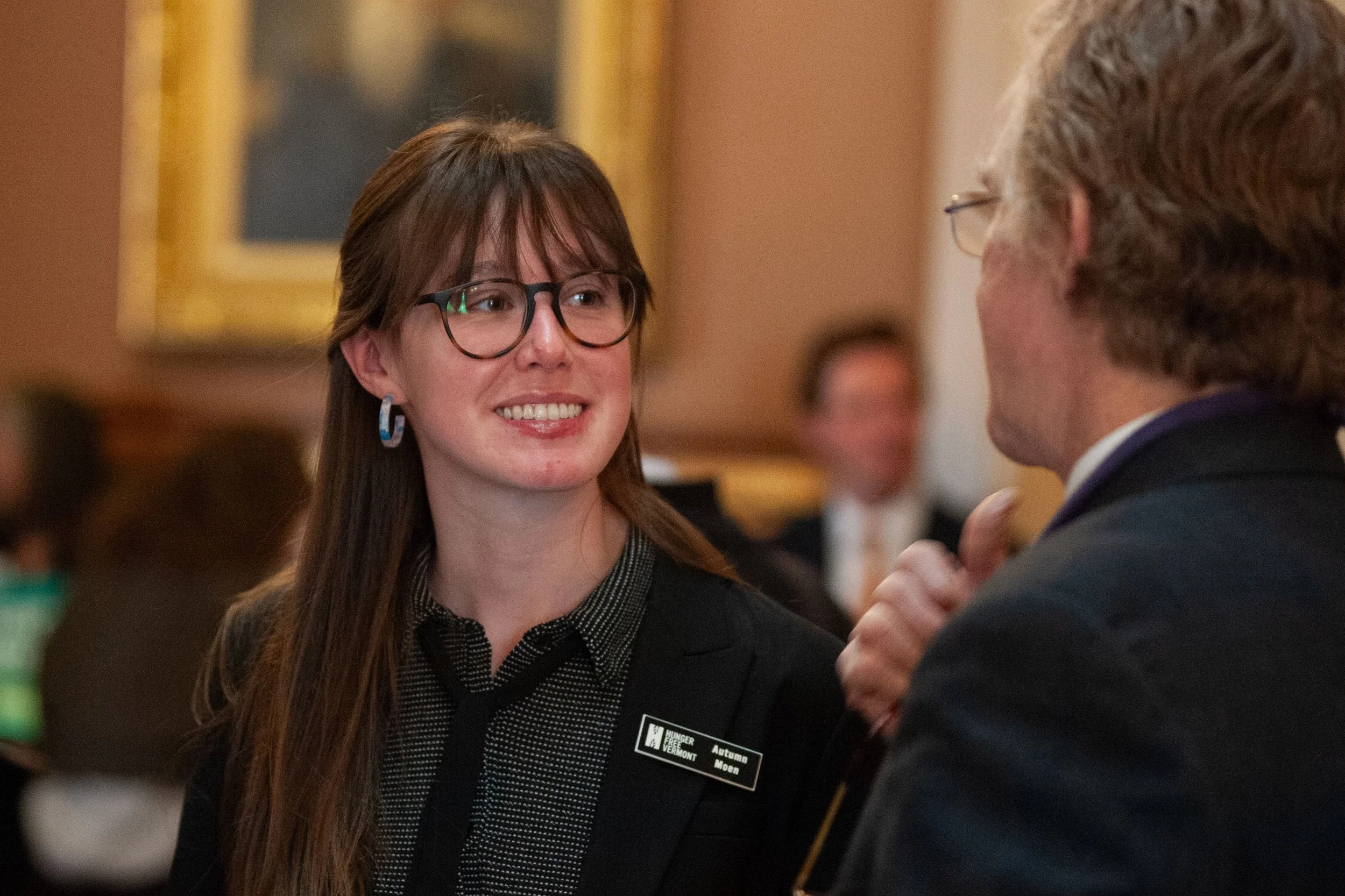
Legislative Policy Lead Autumn Moen at the Statehouse
The state legislative session has come to an end, with the budget bill headed to Gov. Phil Scott’s desk. It was a tough session, as legislators confronted historic federal funding cuts in the face of critical policy priorities like education transformation, housing and land use, and, of course, food security.
Throughout it all, we have been ever-present at the Statehouse, working with legislative champions and organizational partners fueled by an unwavering commitment to ensuring the best outcomes for everyone in Vermont.
Alongside our partners in the Food Security Coalition, we worked hard to advocate for critical funding to sustain food security programs across Vermont, and our work paid off.
Child and Adult Care Food Program (CACFP): A total of $157,000 was appropriated to increase access to meals and snacks in child care settings. This money will allow sponsor organizations to continue operating the CACFP for Family Child Care Homes and start outreach to bring the CACFP to even more providers.
3SquaresVT/SNAP funding: Full funding was included in the budget to ensure the Agency of Human Services had the administrative resources needed to operate 3SquaresVT, in light of a 25% reduction in federal funding. This means that Vermont protected the operation of this program for the 60,000 shoppers who tap into it, and the 600+ grocers and farmers who depend on it for their bottom lines.
Act 104: This 2018 law was amended to increase engagement and communication between the Department for Children and Families and key stakeholders—including community organizations and SNAP-authorized retailers—when there are mandatory or optional proposed changes to the 3SquaresVT/SNAP program.
Benefit Assisters: $3.5 million was allocated for 3SquaresVT and Medicaid benefit assistance at service-providing organizations to help Vermonters navigate complex changes to eligibility and paperwork requirements for both programs. This investment supports the best outcomes for Vermonters by ensuring all eligible people are able to stay enrolled in these important benefit programs AND keeps federal dollars in our state.
We’re also happy to see the following items included in budget that will support the work of our partners:
$350,000 to Bridges to Health, a program that supports health outreach and care coordination for immigrant and migrant workers and their families across Vermont.
$150,000 for the Vermont Language Justice Project to support their work in translating public health emergency materials.
$550,000 to Vermont Foodbank for local food shelves and $250,00 for the Vermonters Feeding Vermonters Program to bring local food from Vermont farmers to food shelves.
$350,000 to NOFA-VT to operate Crop Cash, Crop Cash Plus, and Farm Share programs. While this is less funding than is needed to operate the programs at their current level, NOFA-VT is grateful to be able to continue operating all three programs in the next fiscal year.
Funding to the Land Access and Opportunity Board to support operations and programs.
The budget was sent to the governor’s desk on Friday, and he has five days to sign it, veto it, or let it pass without his signature. We’ll update you when that happens.
Until then, we want to leave you with a note of deep thanks for all of your support and engagement this legislative session. Our work is not possible without strong collaboration and community partnership. On behalf of all of us at Hunger Free Vermont—thank you.
Sign up for our Advocacy and Action emails to get updates like these straight to your inbox.